
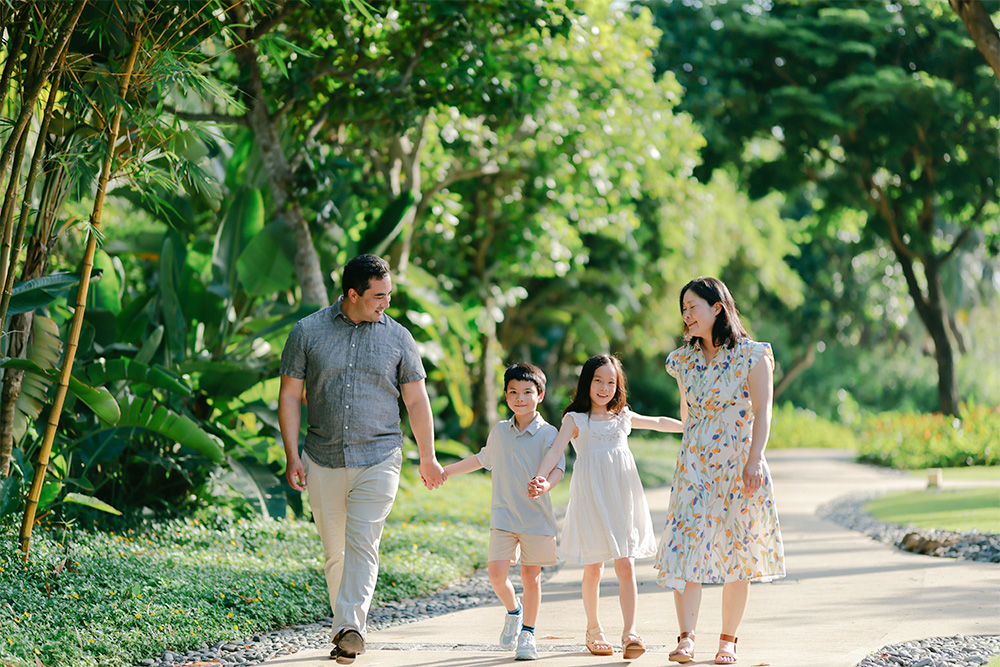
1. Health: From Annual Goals to Long-Term Management
① Health as a Core Family Asset in 2025
Over the past year, health has evolved from a personal concern into a family-level priority. Among high-net-worth households in Australia, health is increasingly viewed as:
• A long-term asset, equal in importance to financial wealth
• A key factor influencing decision-making quality
• The foundation for family stability, productivity, and growth
Rather than short-term “wellness programs,” families are now designing sustainable health-oriented lifestyles.
② Looking Ahead to 2026: Sustainable and Systematic
In 2026, health trends are expected to become even more structured:
• Low-impact, long-term physical activities such as walking trails, swimming, and community sports
• Greater focus on mental wellbeing and sleep quality
• Health seamlessly integrated into daily routines
This approach is especially suitable for multi-generational families, offering consistency, safety, and predictability.
2. Outdoor Living: A Rational and Family-Oriented Evolution
Private sector investment emerged as the most notable contributor to growth this quarter, with two key areas standing out:
① 2025 Reality: Outdoor Living as Daily Life
In Australia, outdoor living is not a lifestyle upgrade—it is a baseline. However, 2025 marked a shift toward:
• Practical and safe outdoor engagement
• Activities that can be sustained over decades
• Experiences that encourage family participation
The emphasis has moved away from extremes toward stability and balance.
② 2026 Outlook: Designed for Long-Term Living
Australia’s outdoor lifestyle continues to stand out due to:
• Seamless integration between urban environments and nature
• Well-developed public infrastructure and coastal access
• Activities that fit naturally into everyday family schedules
For long-term planners, this represents lifestyle resilience rather than trend-driven living.
3. Travel Redefined: From Consumption to Lifestyle Structure
① 2025 Shift: The Rise of Slow Travel
Travel behavior has matured significantly:
• Shorter distances
• Fewer itineraries
• Longer stays
• Greater focus on rest and family connection
This reflects not reduced interest in travel, but a more refined sense of value.
② 2026 Continuity: Travel as a Lifestyle Extension
Looking ahead, travel increasingly functions as part of daily life:
• Short breaks for family reconnection
• Nature-based and wellness-oriented experiences
• Emphasis on recovery rather than activity volume
This aligns naturally with long-term health and family cohesion.
4. Reframing the Value of the Australian Lifestyle in 2026
Across health, outdoor living, and travel, Australia’s lifestyle is defined by:
• Stability over stimulation
• Sustainability over intensity
• Family-first priorities
• Long-term value over immediate gratification
This quiet consistency resonates strongly with families planning across generations.
▲ Conclusion: Lifestyle as a Long-Term Investment
2025 highlighted a crucial truth: the most limited resources are not opportunities, but health, time, and sustainable structure. As families enter 2026, lifestyle itself is increasingly treated as a strategic decision—one that complements financial planning and generational goals. In Australia, a lifestyle centered on health, nature, family, and sustainability continues to prove its long-term value.
True planning begins with how we choose to live.